Introduction In Step 1, we built a simple grounded LLM application. The application could answer questions using our documents, but there was a fundamental problem: we sent all documents to the model for every question. That works for a handful of documents. It doesn’t work for a real knowledge base. So the next question is: How do we give the LLM only the information it actually needs? This leads us to retrieval and the moment we learn about RAG. As usual, you can find the code for this example here: https://github.com/genoiucosmin/AIApp1/tree/Step2 From all documents to relevant documents Step 1 Step 2 Let’s explain why this is cheaper, faster and more scalable conceptually. Chunking and our first retrieval mechanism In the previous example we sent in all documents to the LLM. This is clearly not something scalable, so we need to define a way of sending only the relevant data to the LLM. This is actually RAG – and we will implement a very primitive version of it, by just splitting the documents we had into chunks of 300 characters. Then we find out how many times each word from our question appears in each chunk. We then select the top…
With all the hype around AI, I was thinking it is a good time to actually build something simple, that will explain the basic principles of AI systems and LLMs. There are so many notions out there, so many new things, and technology is advancing so rapidly that even senior engineers have a rough time staying up to date. In order to make this as simple as possible, I will begin with the simplest example of how to integrate an AI API into a .Net app, and then build on that adding more features that will make clear a lot of concepts like : RAG, embeddings, grounding, chunking, guardrails, .Net agents and so on. I will build this in a public github repository, each step on a particular branch. Step 1 – From an LLM Call to a Grounded Application Note, before you try to run the code below, make sure you go over to https://platform.openai.com/ and generate an API key. Before running the application, create an OpenAI API key and configure it using .NET User Secrets or another secure configuration mechanism. You can test with your key in the appSettings.json also but never commit API keys to source control….
If you’ve ever been in a meeting where someone casually said “we just need to add RAG,” and you nodded while secretly searching what that meant under the table, this post is for you. The AI space moves so fast that even experienced developers can suddenly feel surrounded by unfamiliar buzzwords overnight. Terms like temperature, tokens, context window, embeddings, fine-tuning, and RAG get thrown around constantly, often without much explanation. This post is meant to build that foundation. I’ll walk through the core concepts and definitions you need to understand modern AI development. Don’t just skim the terms — try to understand the idea behind each one. Treat this post as a reference you can revisit from time to time, so the next time your company or team discusses a new AI strategy, you’ll understand what’s actually being talked about. You Are Not Behind. But You Do Need to Learn Some New Words. I have been writing code for a long time. Long enough to remember when JSON format was the future, when microservices were going to solve everything, when containers were the thing everyone had to learn or get left behind. Every few years something arrives that feels like…

I’ve been quiet on this blog for about three years. When I last wrote here regularly, I was a technical project manager, reading every leadership book I could find, like John Maxwell’s, Ego Is the Enemy or Peopleware trying to figure out how to help my team, how to become someone worth following. It was a good season. Focused. Clear. I knew I needed to become a better tech lead, a better project manager. I was focused at work while listening leadership books on the commute. Then life accelerated. I left that role — and that company, which had a culture that was quietly draining everyone in it — to go back to being a developer. A few months later I watched a demo of ChatGPT. It was December 2022. I was speechless. The people around me weren’t. “It makes mistakes,” they said. “Companies will never accept it – data privacy, IP theft.” And they were right, in the short term. But all I could think was: yet. All of those objections were true yet. And I’ve spent the two and a half years since watching every one of them slowly stop being true. Meanwhile, life kept moving at full…

This book is aimed at a wide range of professionals, including company leaders, managers, and human resource experts who play a critical role in shaping the culture and dynamics of their teams and organisations. Daniel Coyle gives us an important lesson in leadership and management: quite often, the team dynamics inspired by the leader are more important than the individuals comprising the team. The author delves into the specific actions and elements required for a team to achieve the type of cooperation and coordination that leads to greatness, using real-world examples from a variety of industries and sports, providing practical insight and actionable steps for fostering a culture of collaboration, innovation, and success within a team or organisation. The book covers the key principles and strategies for building a positive and productive group culture: creating safety, sharing vulnerability, and establishing purpose. About the author Daniel Coyle is a best-selling author and speaker who has written several books on the topic of human performance, including “The Talent Code,” “The Little Book of Talent,” and “The Culture Code.” He is known for his research-based approach to understanding how individuals and groups achieve success. Coyle has spent over a decade studying and writing…
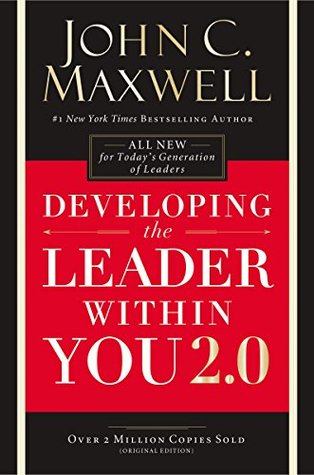
The reason why leadership became such an important subject these days is due to the fact that people realize the following: when you become a leader, your hole life changes. Everything goes up and down with leadership and the world becomes a better place when people become better leaders. Your development as a leader has the power to change everything about you: you will become more effective, your weak points will improve, and your impact will be amplified exponentially. Developing the Leader Within You (we are reviewing the updated 2.0 version released in 2018), cited by many to be the best book you can read at the beginning of your leadership career, revolutionized the way leaders are made and in the process sold more than one million copies. Twenty-five years after its original release, the author returns to his classic text to include the leadership insights and practices he’s learned in the decades since the book first appeared. Thoroughly revised and with two completely new chapters, this new edition updates the foundational principles for transformative leadership that Maxwell has used as a leader for more than 40 years. No matter what arena you are called to–family, church, business, nonprofit–the principles…

Progress Rating: 3/5
Category: People Management (General advice)
Why leaders should read it: It describes simple but powerful techniques that can be used to keep your team motivated while also obtaining the results you need, all without spending too much time. A short must-read lecture for new managers.

Progress Rating: 5/5
Category: Management (Software Industry)
Why leaders should read it: Management in the software industry presents distinct challanges. From how to approach recruiting to how the office should be built in order to boost productivity, Peopleware presents a complete overview of the entire software management process. The book is written as a series of essays on the various ways that software companies and projects go right and wrong. Each chapter has some prescriptive advice that could be used in order to begin a sensible reconstruction of a project, a division, or a whole organization.

Progress Rating: 3/5
Category: Personal Development (Teaching humility and modesty)
Why leaders should read it: It teaches leaders why modesty is more important today than ever and what advantages a quiet leader has in our interconected world. We are also presented with a lot of history tales about how successful and unsuccessful leaders managed their ego.
‘Ego Is The Enemy’ is a valuable book for leaders. There is a lot to learn for someone who is at the beginning of his leadership journey, and this book can help with setting up a good mindset and shaping a healthy way of thinking about this position before being influenced by other unfair events or people with their own agenda. But also, during every leader’s career, there will be times when things are not going so well and times when everything seems to be working perfectly. Both of this cases are turning points during which great leaders think and act in the best way possible in order to keep the motivation and raise the happiness of their teams and companies.

Progress Rating: 4/5
Category: Personal Development (Understanding vulnerability)
Why leaders should read it: It teaches leaders why they must embrace vulnerability and discomfort, how to give great feedback and what to do in order to have a very open, communicative and efficeint team
After more than a decade of studying the topic, Brené Brown presents in this groundbreaking book her take on vulnerability and how understanding it better will help us live a more fulfilled life and increase our contributions to our family, school, job or other communities we are part of.